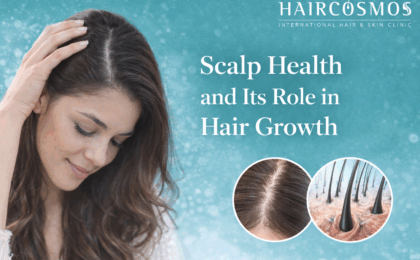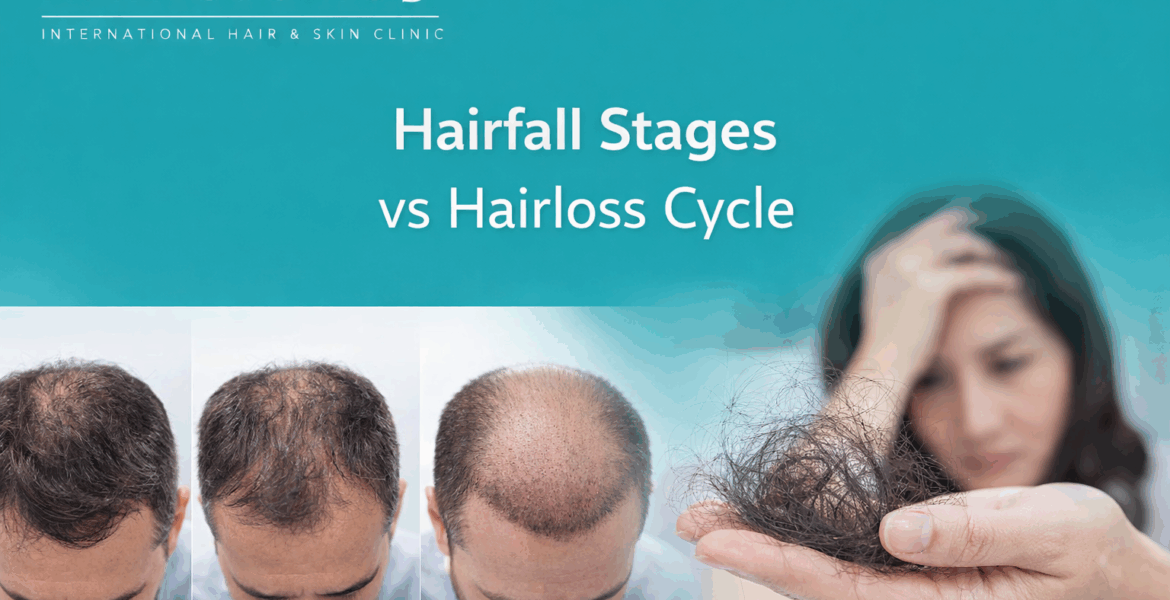
Scalp care is as important as skincare, both in salons and at home. Just like skin, the scalp also needs a personalised approach to treat it effectively. Healthy hair grows from a healthy scalp, where blood vessels are responsible for offering the proper nutrition to the roots and supporting the growth phase and preserving the hair’s health. Understanding the science behind the hair growth or hair loss cycle is essential while you seek the best hair loss or hair restoration solution for you. A deeper knowledge of the hair growth process allows for better treatment options and great results.
Difference between hair fall and hair loss
Understanding Thai differences will help you identify the best and right care and treatment.
Difference in duration and severity
The hair fall is temporary and tends to be less severe than hair loss that people experience because of seasonal changes, stress, and lifestyle factors. Hair loss on the other side can be persistent and may also indicate an underlying issue that needs proper treatment.
- Difference in root causes
Hairfall is linked with internal factors like stress, dirt or improper hair care. On the other hand, hair loss can be linked with deeper causes like hormonal imbalances, genetics and medical conditions. Recognising these will help you to take the right steps at the right time.
- Difference between patterns of thinning
Hairfall leads to more even shedding all across the scalp, and in hair loss, you may notice patches or irregular thinning.
- Difference in growth with potential
Hair fall resolves on its own after the proper addressing of the triggering factors, which leads to hair regrowth. In hair loss, you may need proper professional treatment that has to be personalised, which will help stimulate the regrowth and help restore the hair’s health.
Hairfall or Hair Growth Stages
Learning and understanding the hair growth or hair loss cycle is essential to understanding hair loss. Your scalp has many hair follicles, and every follicle goes through a continuous growth and shedding cycle, rest, and growth. The cycle has four main stages that every follicle has to undergo. Each follicle works independently, and that is the reason why hair does not fall at once. This cycle is continuous and ensures that your hair will be continuously replaced and maintain density and health. The stages are as follows:
The anagen growth phase
It is considered the most active phase and also the longest phase of the cycle, during which hair cells divide rapidly and the hair shaft grows from the follicles. The stage length is determined by the individual’s genetics and lasts for about two to seven years. About 85 to 90 per cent of hair is in the anagen phase at any time, and the longer the timeline of the anagen phase, the longer your hair will grow.
The Catagen Phase
This is the next phase of the hair growth or hairfall cycle; however, it is a short transitional phase that lasts only about two to three weeks. At this stage, the hair follicle shrinks and detaches itself from the dermal papilla and stops its growth. This indicates the end of the anagen phase; however, only 1 per cent of hair is in the catagen phase at any time.
The telogen phase
It is the transitional phase that lasts about three months, during which hair remains in the follicles but is not growing. When the Thai phase ends, the old hair is released, and new anagen hair starts to grow. Normal hair shedding takes about 50 to 100 strands daily and is natural.
The exogen phase
The next stage is when the old hair is actively shed, and new anagen hair has started to grow in the follicle, pushing the old hair out. It is the most vital step for healthy hair growth.
The above hair fall or hair growth stages will help you to understand which are the best treatment options for you or hair growth products for you. It is best to check your scalp with a dermatologist to know more clearly about your hair growth pattern and if you need anything specific.
Hair loss cycle
If you notice hair loss as well as hair thinning, then identifying the early signs is the most vital step to dealing with it. There are many steps or stages of hair loss, and understanding its root cause will help you with it. Hair loss can be a sudden or unusual thinning of the hair or a receding hairline and bald patches on some scalp areas. There are many tools by which dermatologists assess the patterns, extent, and severity of hair loss. The most common scale is the Hamilton-Norwood scale, which ranges from stage 1 to stage 7 and helps in determining the severity of hair loss and when to consult a dermatologist for a scalp examination.
Stages of hair loss
- Stage 1
It is the first stage of hair loss; however, there is no proper hair loss or recession of the hairline that can be noticed.
- Stage 2
During this stage, you might notice a hairline that has a slight recession around the temples. This is more common in older people and is termed a mature or adult hairline.
- Stage 3
It is the next hair loss stage in which hair loss is more noticeable, and the hairline tends to pull back, especially from the temples, giving a V. M or U shape. At this stage, you will first notice banding signs, and the recessed scalp areas are sparsely covered with hair or completely bare. The hair loss is due to ageing, so if you are still young, it can also be due to pattern baldness.
- Stage 3 vertex
Many people experience a thinning in which they start losing hair on the top of the scalp or the vertex.
- Stage 4
This stage of hair loss comes with severe hairline recession, as there may be sparse or no hair on the vertex. Also, there is Stage 4A, where there will be no bald spot, but severe hair loss can be noticed in the frontal temporal area.
- Stage 5
It is the acute progression of the hair loss stage in which the strip of hair between the receding hairline or bald spot becomes thinner, and you may start noticing the early signs of a horseshoe-shaped hairline.
- Stage 6
This stage comes with a thinner strip between two areas of hair loss. The strip becomes thinner or completely disappears because of hair loss.
- Stage 7
It is the last stage of hair loss that shows a horseshoe hair pattern. In it, the shape will remain after the front temporal as well as the crown areas of hair loss also combine.
Conclusion
If you struggle with hair loss and hair thinning, it is vital to consult the best dermatologist in Bangalore to identify the root cause. Whether hair fall or hair loss, both need proper management and treatment. If your receding hairline is a matter of worry, speak to the dermatologist at Haircosmos International in Bangalore to get proper, on-time treatment or management strategies that can help you to avoid further damage. The dermatologist in Bangalore will diagnose the condition, get to the root cause, and then create a proper treatment plan for you that will help you manage it well.