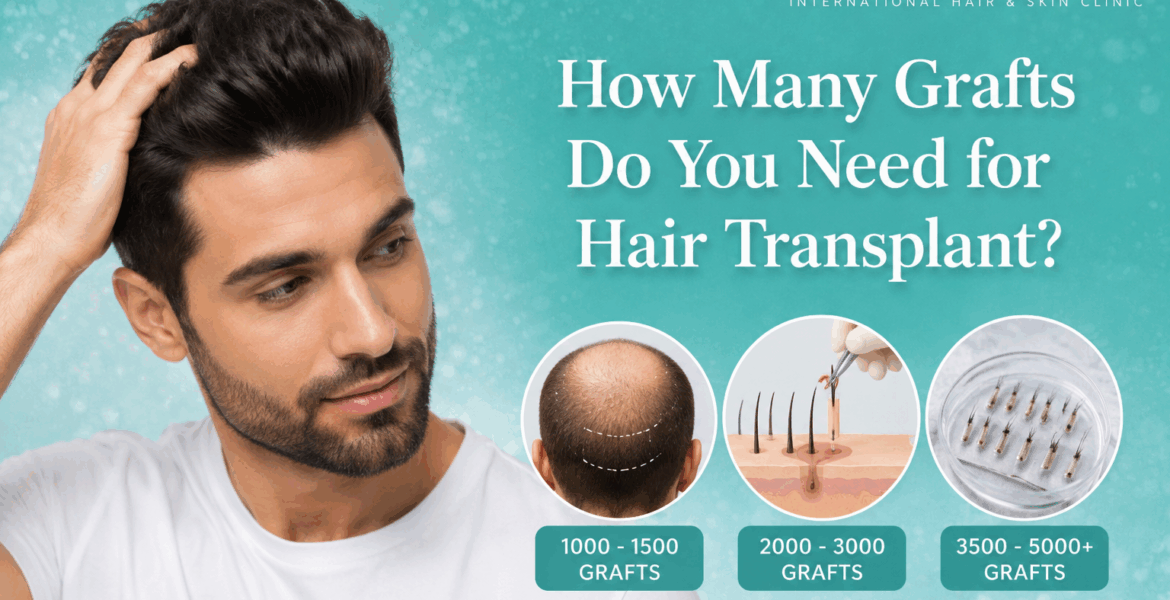
Hair loss can significantly affect confidence and appearance, leading many individuals to explore permanent hair restoration solutions. One of the most common questions patients ask before undergoing a procedure is, “How Many Grafts Do You Need for Hair Transplant?” The answer depends on several factors, including the extent of hair loss, scalp condition, donor hair availability, and desired hair density. At Haircosmos International, specialists carefully assess every patient before recommending the ideal graft requirement for natural-looking and long-lasting results.
Understanding How Many Grafts Do You Need for Hair Transplant? is important because graft planning directly impacts hairline design, coverage, density, and the final outcome of the procedure.
What is a Hair Graft?
Before understanding How Many Grafts Do You Need for Hair Transplant?, it is important to know what a graft actually means.
A hair graft is a small piece of scalp tissue containing hair follicles extracted from the donor area, usually the back or sides of the scalp. Each graft may contain:
- 1 hair follicle
- 2 hair follicles
- 3–4 hair follicles
During a hair transplant procedure, these grafts are implanted into thinning or bald areas to restore hair growth naturally.
The number of grafts required varies from person to person depending on the severity of baldness and the density goals.
Factors That Decide How Many Grafts You Need
There is no fixed number that works for everyone. Several factors help determine How Many Grafts Do You Need for Hair Transplant?
1. Extent of Hair Loss
The severity of baldness is the biggest factor influencing graft count. Individuals with mild hairline recession may require fewer grafts, while those with advanced baldness often need a larger number.
Approximate Graft Requirements:
- Mild Hairline Recession: 1000–1500 grafts
- Moderate Hair Loss: 2000–3000 grafts
- Advanced Baldness: 3500–5000+ grafts
Doctors usually assess baldness using the Norwood Scale to estimate the required grafts accurately.
2. Desired Hair Density
Some patients prefer light coverage, while others want higher density for a fuller appearance. The denser the result desired, the more grafts may be needed.
When discussing How Many Grafts Do You Need for Hair Transplant?, specialists also consider:
- Existing hair density
- Hair texture and thickness
- Scalp visibility
- Hairline expectations
Patients with thicker hair often require fewer grafts to achieve good coverage compared to individuals with finer hair.
3. Donor Area Availability
The donor area plays a major role in determining graft availability. Healthy and dense donor hair allows surgeons to extract more grafts safely without affecting overall appearance.
At Haircosmos International, scalp and donor analysis are carefully performed before planning the procedure to ensure balanced and natural results.
Graft Requirement Based on Hair Loss Area
Understanding the specific area of concern can also help answer How Many Grafts Do You Need for Hair Transplant?
Hairline Restoration
Patients with early hairline recession generally require:
- 1000–1800 grafts
Hairline design is one of the most important aspects because it defines facial appearance and naturalness.
Crown Area Coverage
The crown area often needs:
- 1500–2500 grafts
Since the crown has a circular growth pattern, achieving natural density may require careful graft placement.
Full Frontal Coverage
Patients with thinning in the frontal scalp may require:
- 2500–3500 grafts
Advanced Baldness
Individuals with widespread baldness across the scalp may need:
- 4000–5000+ grafts over multiple sessions
Specialists assess scalp elasticity, donor health, and future hair loss progression before deciding graft numbers.
Can More Grafts Give Better Results?
Many people believe that higher graft numbers automatically mean better outcomes. However, that is not always true.
The goal of a successful hair transplant is:
- Natural-looking hairline
- Balanced density
- Proper graft survival
- Long-term scalp health
Overharvesting grafts from the donor area can damage the scalp and reduce future treatment options.
This is why understanding How Many Grafts Do You Need for Hair Transplant? should always involve a professional consultation rather than self-estimation.
How Doctors Calculate Graft Requirement
Hair transplant specialists use detailed scalp analysis to calculate the ideal number of grafts.
Evaluation Includes:
- Extent of baldness
- Scalp condition
- Donor area density
- Hair caliber and texture
- Future hair loss pattern
- Age and expectations
At Haircosmos International, personalized planning helps ensure that graft placement looks natural and provides long-term aesthetic improvement.
Does Hair Type Affect Graft Count?
Yes, hair type significantly affects graft requirement.
Thick Hair
Thicker hair strands provide better scalp coverage, meaning fewer grafts may be required.
Curly or Wavy Hair
Curly hair creates more visual volume, often reducing the total graft requirement.
Fine Hair
Fine or straight hair may require more grafts to achieve the same density effect.
This is another important reason why How Many Grafts Do You Need for Hair Transplant? varies from person to person.
What Happens During the Procedure?
During a hair transplant:
- Hair follicles are extracted from the donor area
- Grafts are prepared under magnification
- Tiny recipient sites are created
- Grafts are implanted strategically
Advanced graft placement techniques help ensure natural direction, angle, and density.
Modern procedures focus not just on hair growth but also on aesthetic balance and facial harmony.
Recovery After Hair Transplant
Patients undergoing graft transplantation should follow proper aftercare instructions to support healing and graft survival.
Common Recovery Tips:
- Avoid touching the grafts initially
- Protect the scalp from direct sunlight
- Avoid smoking and alcohol during recovery
- Follow prescribed medications carefully
- Attend follow-up appointments regularly
Temporary redness, scabbing, or mild swelling may occur after the procedure, but these effects usually improve within a few days.
When Will You See Results?
Patients often become anxious about visible growth after the procedure. Hair growth after transplant happens gradually.
Typical Timeline:
- Initial shedding: 2–6 weeks
- Early growth phase: 3–4 months
- Noticeable improvement: 6–8 months
- Final results: 10–12 months
Proper graft survival and scalp care are essential for achieving the best outcome.
Why Professional Consultation Matters
Online graft calculators can provide rough estimates, but they cannot replace professional scalp evaluation.
A qualified consultation helps determine:
- Realistic expectations
- Future hair loss progression
- Suitable hairline design
- Safe donor extraction limits
- Long-term treatment strategy
Understanding How Many Grafts Do You Need for Hair Transplant? requires medical expertise, personalized assessment, and careful planning to achieve natural and lasting results.
Final Thoughts
Hair transplant procedures have become highly advanced and effective for restoring confidence and appearance. However, one of the most important parts of treatment planning is understanding How Many Grafts Do You Need for Hair Transplant?
The required graft count depends on multiple factors such as baldness severity, donor area quality, hair type, and desired density. Proper graft planning ensures natural-looking results without overharvesting the donor area.
At Haircosmos International, every patient receives personalized scalp analysis and treatment planning designed to achieve balanced, aesthetic, and long-lasting outcomes.
If you are considering hair restoration, consulting experienced specialists can help you understand your ideal graft requirement and choose the right approach for your hair goals.