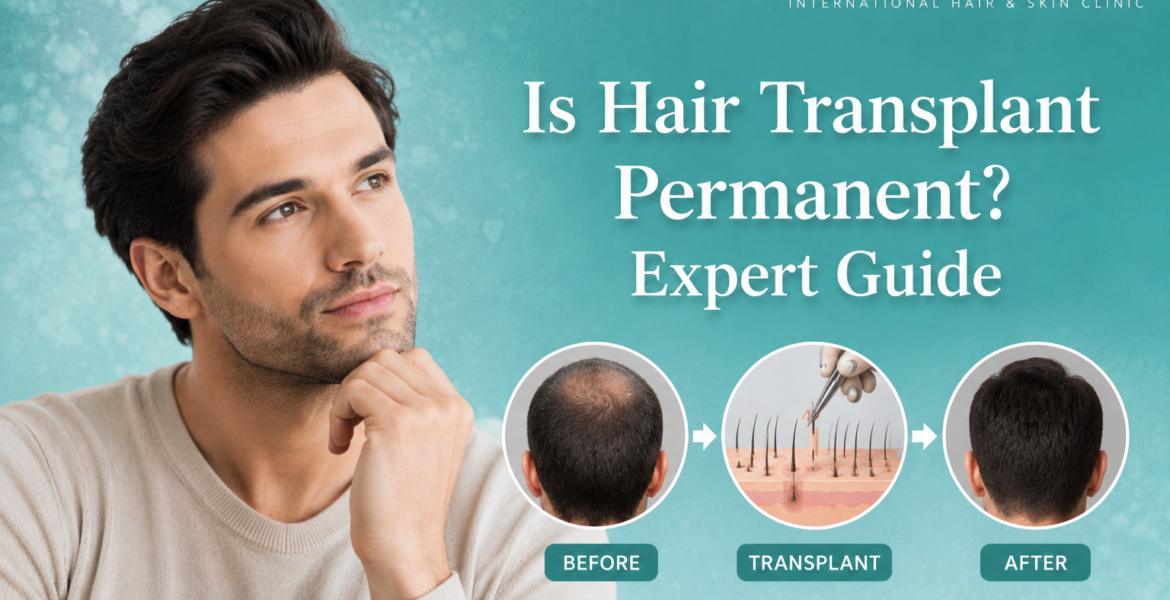
Hair loss is one of the most common concerns affecting both men and women today. With advancements in modern hair restoration techniques, many individuals are now turning to hair transplant procedures as a long-term solution for baldness and thinning hair. However, one question continues to arise among patients — Is Hair Transplant Permanent? Understanding how a hair transplant works, how long the results last, and what factors influence success can help individuals make informed decisions before undergoing the procedure.
At Haircosmos International, patients receive personalized consultation and advanced treatment planning designed to deliver natural-looking and long-lasting hair restoration results.
What is a Hair Transplant
A hair transplant is a cosmetic procedure that involves transferring healthy hair follicles from one part of the scalp (usually the back or sides of the head) to areas experiencing hair loss or baldness.
The transplanted follicles are generally resistant to hair fall because they are taken from genetically stable donor areas. Once implanted successfully, these follicles continue to grow naturally in their new location.
Modern hair transplant procedures are designed to:
- Restore hairline naturally
- Improve scalp density
- Treat bald patches and thinning areas
- Provide long-term hair restoration
The procedure has become increasingly popular due to advancements in technology, minimal downtime, and natural-looking outcomes.
Is Hair Transplant Permanent?
One of the biggest advantages of a hair transplant is that the transplanted hair follicles are usually permanent. Since these follicles are extracted from areas genetically resistant to hair loss, they tend to continue growing even after transplantation.
However, understanding permanency requires clarity about a few important points.
What Makes Hair Transplant Permanent?
The donor hair used in a hair transplant typically comes from the back or sides of the scalp. These follicles are less affected by DHT (Dihydrotestosterone), the hormone primarily responsible for pattern baldness.
Once these healthy follicles are transplanted:
- They adapt to the new area
- Begin producing new hair growth
- Continue following their natural growth cycle
This is why a properly performed hair transplant can provide long-lasting and often permanent results.
Factors That Affect Hair Transplant Longevity
Although transplanted follicles are generally permanent, several factors influence the long-term success of a hair transplant.
1. Surgeon Expertise
Proper graft extraction, handling, and placement are critical for graft survival. Experienced specialists focus on natural hairline design and healthy graft implantation techniques.
2. Donor Hair Quality
Strong and healthy donor hair significantly improves the long-term success of the procedure.
3. Age and Hair Loss Pattern
Younger patients with progressive hair loss may continue losing non-transplanted native hair over time. This may create uneven density if future hair loss is not managed properly.
4. Post-Procedure Care
Following proper aftercare instructions helps improve healing and graft survival after a hair transplant.
5. Overall Health & Lifestyle
Smoking, stress, poor nutrition, and certain medical conditions may impact scalp health and hair quality over time.
What Happens After a Hair Transplant?
Patients should understand that hair growth after a hair transplant happens gradually and follows a natural timeline.
Initial Shedding Phase
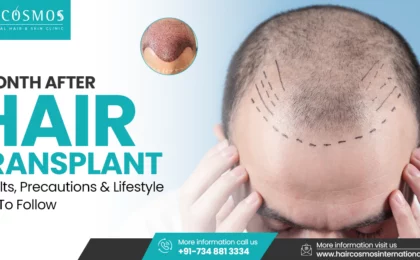
Within the first few weeks, transplanted hair may shed temporarily. This is a normal process called shock loss and does not indicate failure.
New Hair Growth
Fresh hair growth generally begins around:
- 3–4 months after the procedure
Visible Improvement
Patients usually notice significant improvement by:
- 6–8 months
Final Results
Full results are typically visible after:
- 10–12 months
The newly grown hair behaves like natural hair and can be cut, styled, and maintained normally.
Can Transplanted Hair Fall Again?
This is another common concern related to hair transplant procedures.
The transplanted follicles themselves are generally permanent, but there are some important considerations:
- Existing non-transplanted hair may continue thinning with age
- Hormonal changes may still affect surrounding hair
- Poor scalp care can impact overall hair health
In some cases, patients may require supportive treatments such as:
- PRP therapy
- Medications for hair maintenance
- Scalp care treatments
These therapies help maintain existing hair and improve overall scalp health.
How to Maintain Hair Transplant Results
Maintaining results after a hair transplant is important for long-term satisfaction.
Follow Proper Hair Care Routine
Use gentle shampoos and avoid harsh chemical treatments during the healing phase.
Maintain a Healthy Lifestyle
Balanced nutrition, hydration, and stress management support healthy hair growth.
Attend Follow-Up Consultations
Regular follow-ups help monitor scalp condition and long-term hair health.
Avoid Smoking & Excessive Alcohol
These habits may affect blood circulation and healing.
Consider Maintenance Treatments
PRP therapy and dermatologist-recommended treatments can support stronger hair growth after a hair transplant.
Who is a Good Candidate for Hair Transplant?
A hair transplant is suitable for individuals experiencing:
- Male pattern baldness
- Receding hairline
- Hair thinning
- Bald patches
- Hair loss due to genetics or scarring
The best candidates usually have:
- Stable donor hair
- Good scalp health
- Realistic expectations
A professional scalp assessment helps determine suitability for the procedure.
Benefits of Hair Transplant
Modern hair transplant procedures offer several advantages compared to temporary hair restoration solutions.
Key Benefits Include:
- Natural-looking hair growth
- Permanent follicle transfer
- Improved confidence and appearance
- Minimal downtime
- Long-term solution for hair loss
At Haircosmos International, personalized treatment planning helps patients achieve balanced and aesthetic outcomes according to their facial structure and hair goals.
Common Myths About Hair Transplant
Myth 1: Hair Transplant Gives Instant Results
Reality: Hair growth occurs gradually over several months.
Myth 2: Transplanted Hair Looks Artificial
Reality: Advanced techniques focus on natural density and hairline design.
Myth 3: Hair Transplant Stops Future Hair Loss Completely
Reality: Transplanted follicles are generally permanent, but existing native hair may continue thinning over time.
Myth 4: Hair Transplant is Extremely Painful
Reality: Modern procedures are minimally invasive and performed under local anesthesia.
Final Thoughts
A hair transplant is considered one of the most effective and long-lasting solutions for hair loss. In most cases, transplanted hair follicles are permanent because they are taken from genetically stable donor areas resistant to hair fall.
However, long-term success depends on multiple factors such as proper planning, experienced specialists, healthy donor hair, and good post-procedure care. Understanding realistic expectations is essential before undergoing treatment.
At Haircosmos International, advanced hair restoration procedures are designed to provide natural-looking and lasting results tailored to individual needs.
If you are considering a hair transplant, consulting experienced professionals can help you understand the procedure, expected results, and the best approach for achieving fuller and healthier hair.