Over the past few years, hair loss has become a common concern affecting both men and women. According to NAAF, over 50% of men by age 65 and up to 50% of women by age 50 experience hair loss.
This is why many people start exploring different options to restore their fuller hair look. Among so many options, hair transplants and hair patches are among the most considered.
They are both designed to improve appearance and bring back lost confidence. However, they vary in their approaches, results, and long-term outcomes. Many people often feel confused when choosing between them, as one is a permanent solution while the other offers an immediate fix.
It is crucial to understand how these two options differ to make an informed decision. This blog discusses what you need to know about hair transplants vs. hair patches and how to choose the right option for you.
What Is a Hair Transplant?
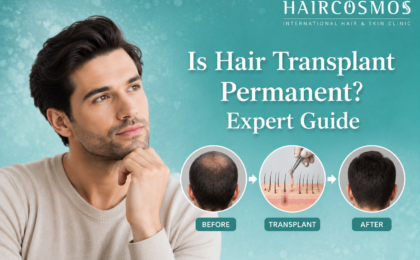
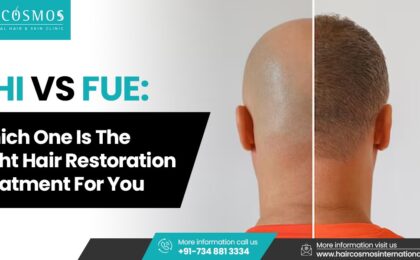
A hair transplant is a medical-grade surgical procedure. In this procedure, hair follicles are harvested from one part of the scalp, typically the back or sides, and transplanted to the affected areas. The results are natural-looking, as it uses your own hair. The procedure is performed under local anaesthesia and is considered a long-term solution. The results are not immediate as the transplanted hair continues to grow over time. This treatment is generally recommended for individuals with sufficient donor hair and stable hair loss patterns.
What is a hair patch?
A hair patch, on the other hand, is a non-surgical, customizable, quick fix designed to cover areas of hair loss. These patches are generally made of artificial or natural hair and attached to the scalp using adhesives, clips, or bonding methods. Individuals seeking a quick, non-invasive solutions, especially those experiencing extensive hair loss, prefer these patches.
Key Differences Between Hair Transplant and Hair Patch
The key differences between a hair transplant and a hair patch are as follows:
| Feature | Hair Transplant | Hair Patch |
| Procedure Type | Surgical procedure using your own hair follicles | Non-surgical method using an artificial or natural hair system |
| Permanence | Long-term and considered permanent | Temporary solution that requires replacement over time |
| Results Timeline | Gradual results over a few months | Immediate visible results |
| Maintenance | Low maintenance once hair grows | Requires regular cleaning, adjustments, and upkeep |
| Natural Appearance | Uses natural hair, blends with existing hair | Can look natural but depends on quality and maintenance |
| Suitability | Best for individuals with sufficient donor hair | Suitable for all stages of hair loss, including advanced baldness |
| Downtime | Requires recovery time after procedure | No downtime |
Which Option Is Better for You?
Deciding which option is better for you can feel overwhelming. Here are a few considerations to keep in mind while making a choice.
For Early to Moderate Hair Loss
If you have early to moderate hair loss and enough donor hair, a hair transplant is the best option.
For Advanced Hair Loss
Individuals with extensive or complete hair loss where donor hair alone may not be sufficient for a transplant must go for a hair patch.
For Immediate Results
A hair patch is the ideal choice if you are looking for a quick fix that delivers immediate results without waiting months for hair growth.
For Long-Term Solution
Choose a hair transplant if you are looking for a long-term and permanent solution.
Limitations of Both Options
Hair Transplant
- It is a surgical procedure, and requires a longer recovery time.
- The results after surgery are not immediate. It may take couple of months or few months.
- Even though you look for a long-term solution, insufficient donor hair makes you ineligible.
Hair Patch
- It is a temporary solution, just a quick fix.
- Regular replacement if not maintained well.
- Ongoing maintenance is needed, such as cleaning and adjustments.
- It may not feel as natural as real hair in some conditions.
Role of Consultation in Choosing the Right Option
A consultation with an expert can help evaluate other important factors, such as the extent of hair loss, scalp condition, and the availability of donor hair, before you make a final decision.
Your doctor may also assess your expectations, lifestyle, and long-term goals before recommending a suitable option. This is how you ensure the chosen solution is not only effective but also practical in the long run.
Conclusion
Confusion between hair transplants and hair patches is common. The key is to understand the differences between these two approaches and how they help manage hair loss. Assessing each of them, noting its advantages and limitations, can help you identify the most suitable option.
At the same time, evaluating other factors, such as the extent of hair loss, expectations, and lifestyle, is equally important when choosing between these two.
Book your consultation with experts at Haircosmos International and find the right option for yourself.
Frequently Asked Questions
- Can I exercise or play sports with a hair patch?
Yes, but you may need to take certain precautions, as excessive sweating or friction can affect durability and bonding.
- Will a hair transplant stop future hair loss?
No. While a hair transplant helps restore hair in treated areas, it does not prevent ongoing hair loss in untreated regions.
- Is there any discomfort during a hair transplant procedure?
Minimal discomfort is common, followed by mild soreness. The procedure is generally done under local anaesthesia.
- Can weather conditions affect a hair patch?
Yes, extreme heat, humidity, or water exposure can impact the adhesion and longevity of a hair patch.